
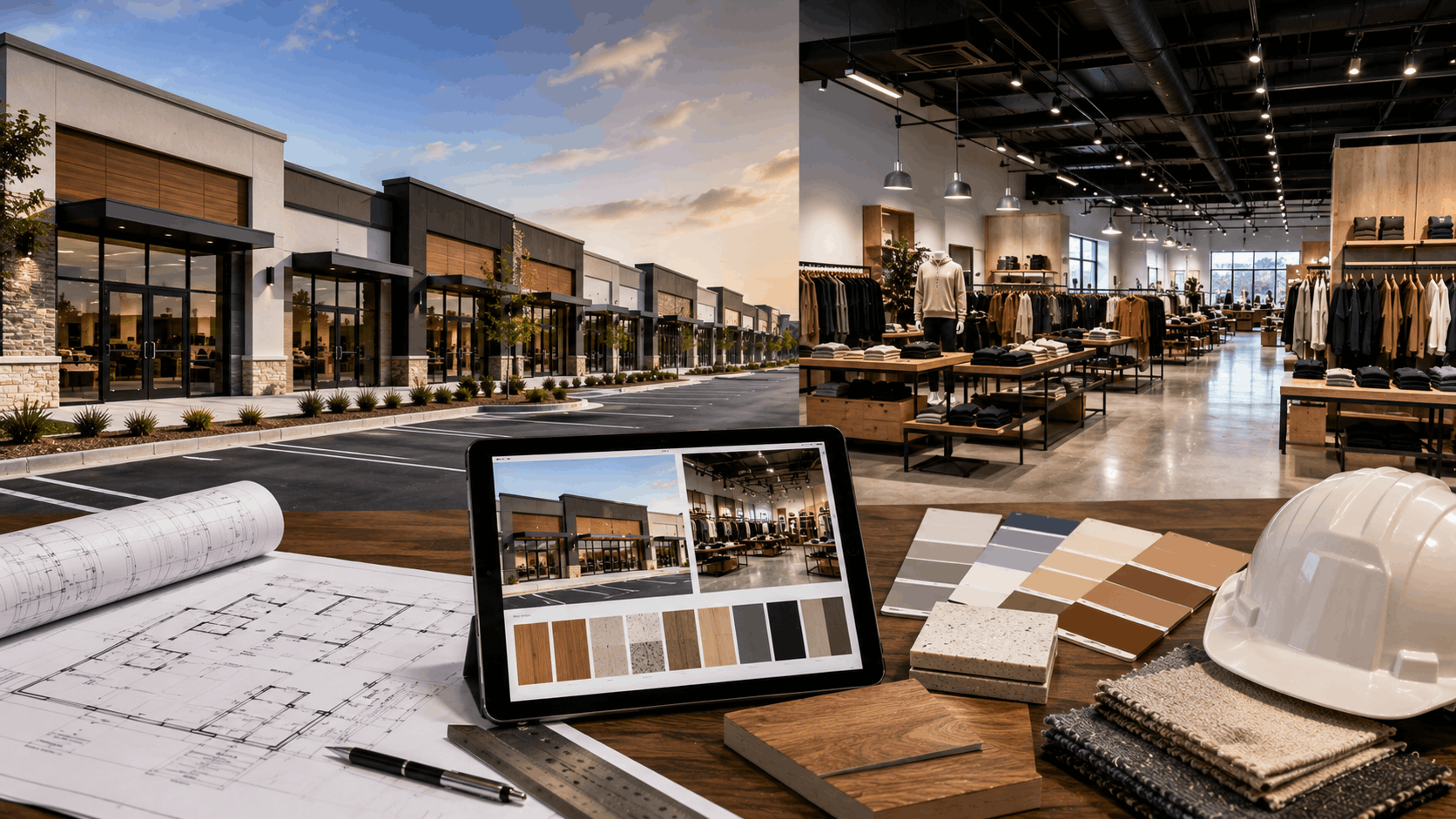
01 Jul How to Standardize Retail Rollouts Without Making Every Location Identical
National retail growth depends on consistency. Customers should recognize the brand as soon as they enter a new store, whether that location is in San Diego, Salt Lake City, Las Vegas, or another market across the country. The finishes, fixtures, lighting, signage, layout, and overall experience should feel familiar. Construction conditions, however, are rarely consistent from one location to the next.
One store may occupy a new retail shell, while another is being built inside a former restaurant. A location in Southern California may face a different permitting path, utility condition, or landlord requirement than a similar store in Utah or Nevada. Local labor availability, delivery access, climate, inspection procedures, and existing building systems can also change the construction plan.
The goal of a strong retail rollout program is not to force every site into exactly the same process. It is to identify which parts of the brand and construction program must remain consistent, then create enough flexibility to adapt each location without losing control of cost, quality, or opening dates.
That balance becomes especially important when a retailer is opening several locations within a short period. Small inconsistencies that might be manageable on one project can multiply quickly across a program. A missing detail, late material decision, or unclear landlord responsibility can affect multiple stores before the issue is recognized. A repeatable rollout system gives owners a better way to protect the brand while responding to the realities of each market.
Separate the Brand Standards From the Site-Specific Conditions
Every rollout should begin with a clear understanding of what cannot change. These are the elements that define the customer experience and make the brand recognizable. They may include storefront proportions, signage, signature colors, flooring, decorative lighting, display systems, millwork, service counters, technology, furniture, fixtures, equipment, and customer circulation. Some brands also have strict requirements for back-of-house storage, employee areas, security, accessibility, and point-of-sale systems.
These standards should be documented in a construction package that is detailed enough to guide local design teams, contractors, vendors, and landlords. At the same time, the package should distinguish between true brand requirements and details that can be adjusted to suit local conditions. That distinction matters. When every item is treated as fixed, the team may spend time and money forcing a prototype into a building where it does not fit naturally. Meanwhile, when too many decisions are left open, each store begins drifting away from the program.
A site-specific review should happen before the prototype is adapted. The contractor and design team need to understand the existing building, utility service, structural conditions, fire protection, HVAC capacity, plumbing, electrical systems, loading access, ceiling heights, storefront limitations, and landlord rules. For example, a retail concept that relies on a large illuminated storefront may require a different solution in a historic downtown building than in a newer suburban center. The visual identity can remain consistent, but the attachment details, dimensions, materials, and approval process may need to change.
Mechanical and electrical systems deserve early attention because they are common sources of hidden cost. A former tenant’s HVAC equipment may be present but undersized, poorly maintained, or unable to support the new occupancy. Electrical capacity may appear adequate until the final lighting, equipment, displays, technology, and signage loads are added. Plumbing can have a similar effect. Restrooms, employee sinks, service counters, beauty stations, food preparation areas, or specialty equipment may require connections that are not located near the proposed layout. Moving them may involve slab cutting, landlord coordination, or access to spaces below. These conditions should be identified before the rollout schedule assumes that each location will follow the same duration.
The prototype documents should then be adapted intentionally. Instead of redesigning every store from the beginning, the team can maintain a controlled library of approved alternatives. These may include several storefront types, ceiling approaches, equipment layouts, finish substitutions, and mechanical strategies. Over time, the approved-alternative library becomes one of the most valuable rollout tools. When a similar condition appears in another market, the team already has a tested response rather than starting over.
Use One Program Structure to Manage Decisions Across Every Location
Consistency depends on more than drawings. It requires a management system that gives the owner visibility across all active and upcoming projects. Each location should follow the same basic stages: site evaluation, due diligence, design adaptation, landlord review, permitting, procurement, construction, inspections, merchandising, and turnover. The exact duration may change, but the milestones should remain recognizable across the program.
A central decision log can prevent the same question from being answered differently on several projects. When the owner approves a finish substitution, fixture detail, or installation method, that decision should be recorded and shared with every team working on the rollout.
The same principle applies to lessons learned. Suppose one store discovers that a display system conflicts with electrical devices or that a decorative material is being damaged during late-stage installation. That information should reach the next locations before they repeat the same problem. Procurement should also be managed at the program level. Brand-specific fixtures, millwork, lighting, equipment, signage, and finishes may come from national vendors, while other materials are purchased locally. The construction schedule needs to distinguish between owner-furnished, contractor-furnished, and vendor-installed items.
Responsibility should be clear. The team should know who orders each product, who tracks it, where it is stored, who receives it, who inspects it for damage, and who installs it. A shipment arriving at the wrong time can create storage problems, while a missing component can prevent an otherwise complete store from opening.
Summer construction adds another layer of coordination in Cook Builders’ core western markets. High temperatures in Las Vegas and Salt Lake City can affect exterior work, material handling, worker productivity, and HVAC startup. Meanwhile, coastal conditions and local review procedures can influence San Diego schedules. A strong rollout schedule accounts for these regional differences rather than assuming that the same calendar works everywhere. Communication with landlords is equally important. National retailers may work within properties managed by different owners, each with unique insurance requirements, work hours, delivery procedures, utility rules, shutdown policies, and closeout expectations. A standardized landlord checklist helps identify those requirements early. It also reduces the chance that an approval, inspection, or building-management condition will appear late in construction.
Quality control should follow a repeatable process as well. The contractor can use prototype-specific checklists, mockups, photo documentation, and phased inspections to confirm that critical brand details are being executed consistently. The punch-list process should begin before the final week. Storefronts, finishes, millwork, lighting, fixtures, technology, equipment, and signage can be reviewed as they are installed. This allows corrections to occur while the responsible trade is still on site. Turnover should include enough time for merchandising, technology setup, inventory, employee training, cleaning, and final owner review. A store may be physically complete but not operationally ready. Treating construction completion and public opening as the same date leaves no room for final preparation.
Cook Builders delivers retail and programmatic construction for clients expanding across multiple markets. With offices in Salt Lake City, San Diego, and Las Vegas and experience working nationwide, Cook Builders combines consistent systems with the local coordination each site requires.
Planning a retail rollout or expanding a national brand into new markets? Contact Cook Builders to discuss prototype adaptation, preconstruction, construction management, and a repeatable delivery strategy.


